Rock salt, ice melt and your dog's paws: a vet's guide to the aisle and the sidewalk
What the "pet friendly" label leaves out, which ice melt ingredients are hardest on dogs, and why the sidewalk can be frozen on a 38°F morning.
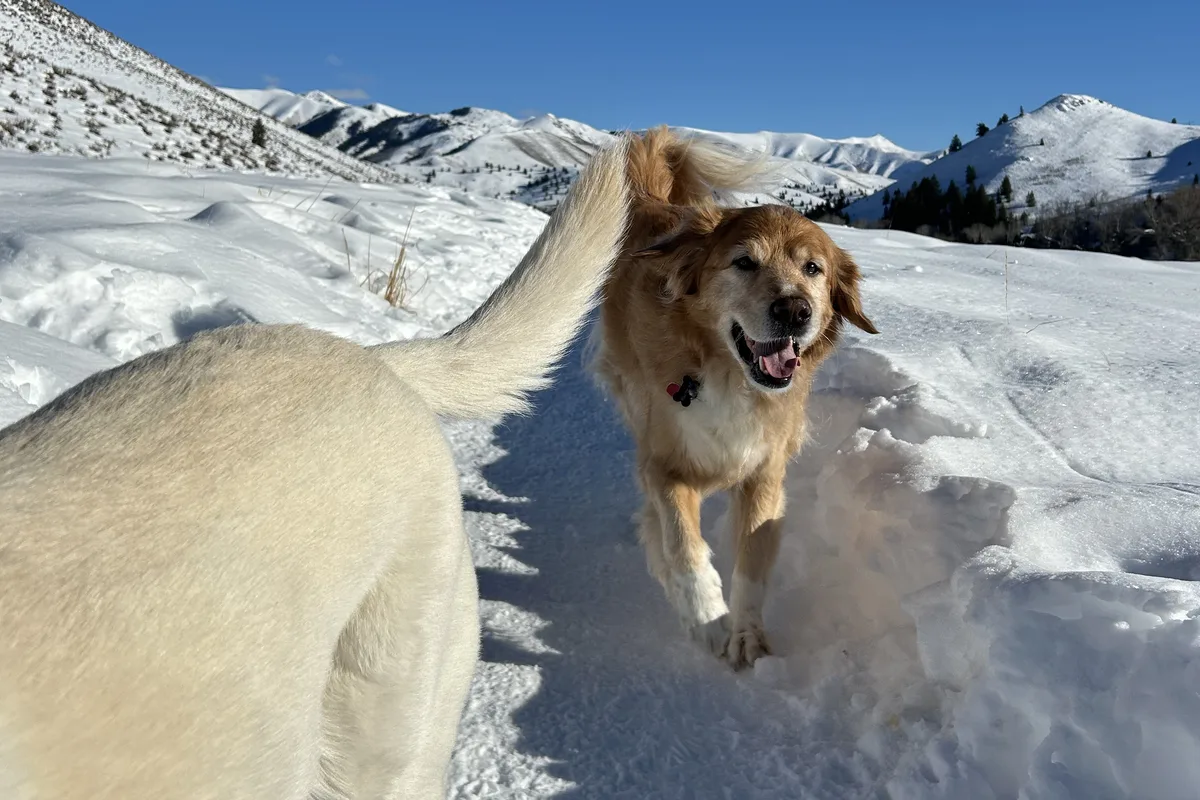
Salt is everywhere in winter, and your dog will inevitably have to walk through it. This guide covers three things: what to look for when buying ice melt, when to expect salt on your walk, and how to protect your dog's paws.
Why salt matters for dogs
Rock salt itself is sharp and can cause abrasions to paw pads. Prolonged exposure to the caustic material can irritate and dry out paw pads, leading to splitting and cracking.
Rock salt doesn't just cause skin irritation, it is actually more dangerous when eaten. Dogs often ingest it by licking their paws after a walk. Mild ingestion can lead to vomiting and diarrhea but eating more causes elevated blood sodium levels and electrolyte changes which can cause neurologic changes like dizziness, wobbliness, seizures, altered mental state, and even death.
At the store: what to look for in pet friendly ice melt
When you go to the store for ice melt, the "pet friendly" label won't tell you much. The ingredient list will. Here's how the common ones compare, from most to least harmful.
Rock salt (sodium chloride). As described above, the worst.
Calcium chloride. Another very common ingredient in most ice melts. It can cause drooling, vomiting and diarrhea, or in larger quantities painful mouth and stomach ulcers and electrolyte changes.
Potassium chloride and magnesium chloride. Can cause significant gastrointestinal irritation which can result in bloody diarrhea and vomiting.
Urea-based ice melts. Commonly labeled "pet friendly." While they are less toxic than others, ingestion can cause drooling and mild GI signs, or weakness and tremors in larger volumes.
"Pet safe" on the bag: what it actually means
"Pet safe" isn't an official designation or a guarantee. All products carry some risk to your pets, but some are more likely to be dangerous than others. If you'd rather try a non-ice-melt product, consider spreading sand or wood shavings.
Reading the label
- Skip: sodium chloride (rock salt) as the main ingredient.
- Better: urea-based products.
- Simplest for your own steps: sand or wood shavings, if traction is all you need.
- Either way: use as little as you can, sweep up the extra, and store the bag where your dog can't reach it.
On the sidewalk: you don't choose the salt
You can control your own steps. You can't control the city, your building or the house next door. So the real question on a winter walk is when to expect salt and ice.
Weather apps report air temperature. Dogs walk barefoot on surfaces. To quantify the difference between those two realities, we spent months taking infrared thermometer readings of real sidewalks, streets, trails, and parks: coast to coast, across urban, suburban, and rural settings. Asphalt, concrete, and grass: the surfaces dogs actually walk on.
These are field observations, not a controlled study. We share them because the pattern was consistent, and because nobody else is measuring sidewalks for paws.
The forecast said upper 30s. The sidewalk was frozen.
Most guidance on frozen pavement is written for drivers. Road crews expect pavement to run a few degrees colder than the air on a cloudy night, and they salt accordingly. Roads also get help that sidewalks never do: traffic heat, plows, and a dark surface that holds the day's sun.
Sidewalks, grass strips and residential streets get none of that. In our winter readings, the ground a dog walks on was at or below freezing on mornings when the forecast said upper 30s. It happened on cloudy days, at night, and in the shade of buildings, and more often than road guidance would predict. Sun flipped it: on clear afternoons, the same asphalt read warmer than the air.
A frozen sidewalk on a 38°F morning is the sidewalk that got salted the night before. If the forecast is above freezing and the ground isn't, assume salt, and assume ice in the shade.
Snow lies to you twice
Snow isn't a buffer between the paw and the cold. In daylight, snow-covered grass sometimes read warmer than the air, so a dog looks comfortable. After dark, the snow surface cooled well below the air, roughly ten degrees colder in our nighttime readings, which matches what snow scientists see under clear skies.
A 29°F evening walk on snow can be a sub-20°F walk at paw level. After sunset, treat snow-covered ground as colder than the forecast.
Protecting paws, wherever the salt came from
Protection begins at home before your walk. Booties protect paw pads and the more sensitive area between the toes from snow, salt, ice, and cold. They can give some extra traction and prevent secondary salt ingestion from paw licking. Booties come in all shapes and styles, so don't be afraid to try a few different types and see what works best for your dog. If you need help getting your dog used to wearing them, watch our boot training video from Kristen VanNess, KPA CTP, our head trainer.
Why boots, which style, and how to get them on, in under four minutes.
Another option is using a paw wax or balm. This will help seal in moisture to prevent cracking, and it puts a thin barrier between the pad and the salt. In very cold or rugged conditions it might not be enough on its own and can be used in combination with booties.
All dogs will benefit from a thorough paw wipe-down after a walk. Unscented baby wipes or even just warm water and a paper towel will do. It removes any ice, salt or other debris and gives you a chance to check for redness or irritation on the paws.
If your dog walked through salt
If you know your dog walked through lots of salt, take extra time to rinse and dry all their paws thoroughly once home. If you notice redness, swelling, cuts, or discharge, those are reasons to head to the vet. Keep an eye out for increased paw licking or limping.
Frequently asked questions
Is rock salt bad for dogs? Yes. Rock salt (sodium chloride) is sharp and can cause abrasions, and longer exposure dries out paw pads until they crack and split. The bigger risk is eating it. Dogs lick salt off their paws after a walk, and swallowing enough can raise blood sodium levels and cause vomiting, wobbliness, seizures and, in severe cases, death.
Is ice melt bad for dogs if they lick it? It depends on the ingredient, but all of them carry some risk. Calcium chloride can cause drooling, vomiting and diarrhea, and stomach ulcers in larger amounts. Potassium and magnesium chloride can cause significant stomach upset. Urea-based products are the least toxic, though a lot of any of them can make a dog sick. Wiping paws after every walk is the simplest fix.
What should I look for in a pet friendly ice melt? Read the ingredient list, not the front of the bag. "Pet safe" and "pet friendly" aren't official standards. Avoid products that are mostly sodium chloride. Urea-based products are the least harmful of the common options. If you only need traction, sand or wood shavings avoid the problem entirely.
Can sidewalks be icy when it's above freezing? Yes. In our winter field readings, sidewalks and grass were often at or below freezing on mornings when the air was in the upper 30s, especially on cloudy days, at night and in shade. If the forecast is just above freezing, expect ice in shady spots and salt on the sidewalk.
Do dogs need protection on snowy walks? After dark, especially. In our readings, snow-covered ground cooled well below the air temperature at night. A 29°F evening can mean a much colder surface at paw level. Boots or paw balm help, and so does a shorter walk and a paw check when you get home.
Know what the ground is doing before you walk
The forecast on your phone tells you the air temperature. Pawcast™ tells you what it means for your dog, with Dog Feel° and surface readings for your location.
Create your free accountHow Pawcast talks about conditions
A note on the words you will see in this post and in the app. Pawcast™ (weather.pet) describes conditions using three tiers: WITHIN RANGE, CAUTION, and HIGH RISK, alongside a Dog Feel° temperature and a Risk Score from 0 to 100. Conditions are also described relative to your dog's personal band: BELOW RANGE, WITHIN RANGE, or ABOVE RANGE. You will not see absolute promises in Pawcast, in either direction: no wording that guarantees a walk will go well, and no wording that a given moment is risk-free. Conditions are always relative to your specific dog, and your judgment on the ground always comes first.
Written by Hilary Jones, DVM, Chief Veterinary Officer at Pawcast. Boot training video by Kristen VanNess, KPA CTP, Head Trainer at Weather.pet.
Pawcast provides estimates to help guide your decisions, not replace them. Your dog's individual health and real-time condition always come first. This article is informational, is provided for educational purposes, and is not a substitute for veterinary care. If you have concerns about your dog, contact your veterinarian.