Signs of Arthritis in Dogs: Why Cold Weather Makes It Worse
Cold weather makes arthritis flare earlier on a walk. A veterinarian explains the signs of arthritis in dogs, the cold-weather red flags, and how to help at home.
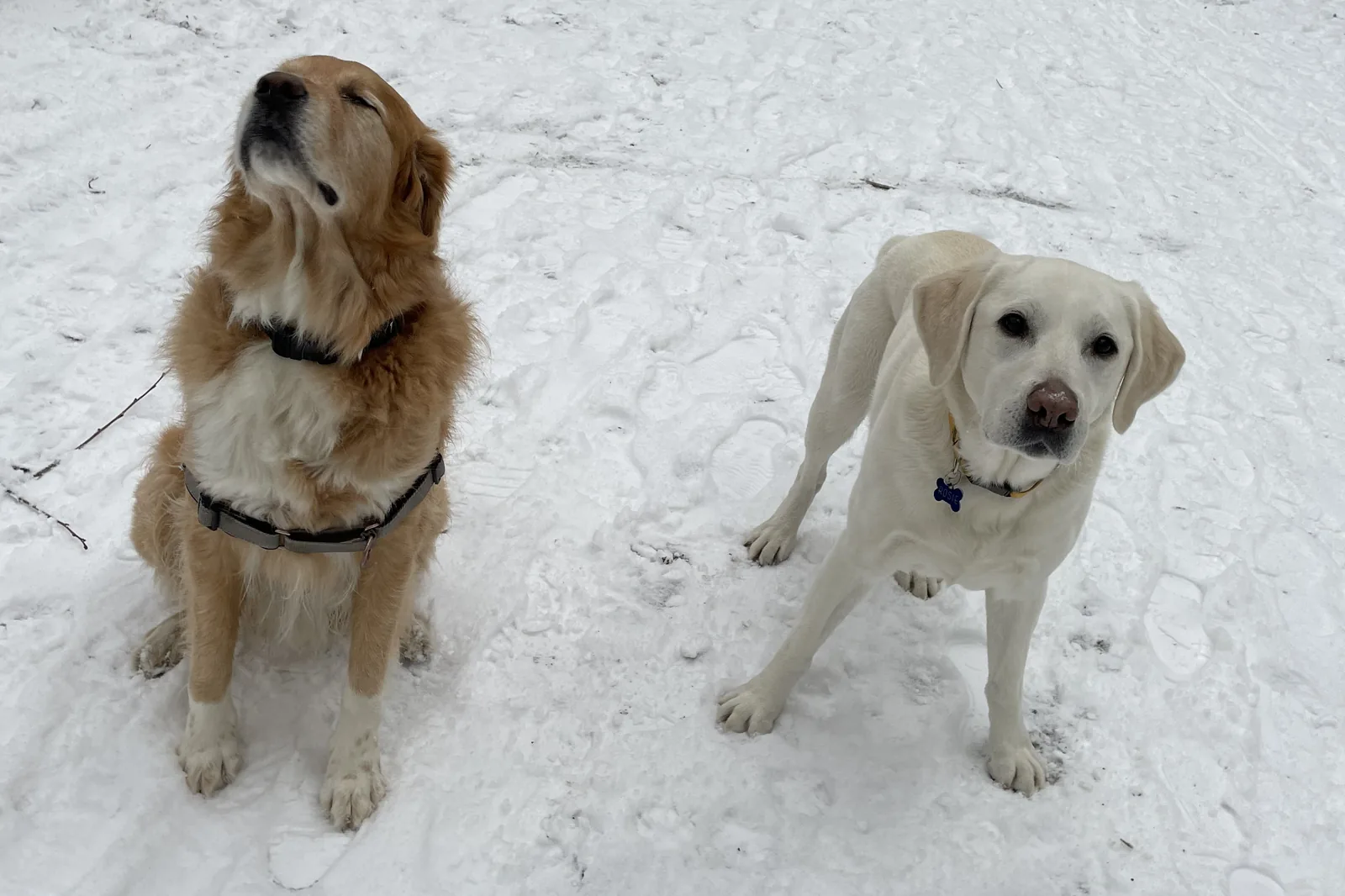
Osteoarthritis affects an estimated 20% of dogs over one year old. By eight, most dogs show some degree of joint change. Many of them hide it well until the first cold snap.
Cold weather does not cause arthritis. It makes existing arthritis show up sooner and hurt more. A dog who looked fine in October can start lagging behind in December. This guide covers how to tell if your dog has arthritis, the cold-weather red flags to watch for on a walk, and what you can do at home before you see your vet pro.
Why cold weather makes arthritis seem worse in dogs
Three things happen to an arthritic joint when the temperature drops.
Joint fluid thickens. Synovial fluid lubricates the joint, and it flows less freely in the cold. Stiff fluid means stiff movement, especially in the first few minutes outside.
Muscles tighten. Cold muscles contract to hold heat. Tight muscles around an already sore joint pull on it with every step.
Dogs move less. Shorter walks and more time on the couch mean less of the gentle movement that keeps arthritic joints mobile. The less a dog moves, the stiffer the joint gets, and the cycle feeds itself through the winter.
Some pet parents also notice flares before a storm. Barometric pressure changes are a reported trigger in people with arthritis, and many veterinarians see the same pattern in dogs, though the evidence in dogs is anecdotal.
How to tell if your dog has arthritis
Arthritis rarely announces itself with a limp. The early signs of arthritis in dogs are subtle and easy to write off as aging. Dog arthritis symptoms to look for:
- Stiffness after rest, especially first thing in the morning, that loosens up after a few minutes of movement
- Slow to stand up, or standing in stages (front legs first, then a pause)
- Hesitating at stairs, the car door, or the couch
- A shorter stride or a bunny-hop with the back legs
- A limp that comes and goes, often worse after a long walk or a hard play session
- Licking or chewing at one joint
- Muscle loss over the hips and back legs, with the front end looking comparatively bulkier
- Irritability when touched or picked up, or a dog who moves away when you reach for a hip or shoulder
- Sleeping more, or restlessness at night from an inability to get comfortable
One or two of these on their own may be nothing. Three or more, or any that are new, are worth a conversation with your vet pro. Arthritis is diagnosed with an orthopedic physical exam and, often, X-rays, and it is far easier to manage when caught early.
Cold-weather red flags on a walk
Cold-induced joint pain tends to flare earlier in the walk than you might expect. You might even see your dog resist going out at all. Some dogs get more excited than others for a walk, but if your dog usually loves walks and suddenly seems less interested, that change is the signal.
Every dog is different, but on a cold walk, watch for:
- Lifting a paw off the ground, which is easy to miss
- Slowing down or falling behind
- Turning back toward home
- Holding the tail tight, as if making herself smaller
- Reluctance to go out in the first place
Senior dogs are the group most likely to show these signs, but small dogs, short-coated dogs, puppies, and dogs who are unwell lose heat faster than you would expect too. How cold is too cold for dogs breaks the thresholds down by size and coat.
Is it shivering, or is it pain?
Shivering is a confusing indicator. It looks identical to trembling, and trembling in an older dog has several causes: cold, pain, anxiety, muscle weakness, and age-related tremors among them.
If you are asking "is my dog cold, or is she hurting," two things to keep in mind. First, a dog who is not shivering is not necessarily comfortable, so do not rely on this one sign. Second, a dog who shakes at home in a warm room is not cold. If your old dog is shaking indoors, or shaking is new, that points to pain or another cause and belongs in front of your vet pro.
How to help a dog with arthritis at home in winter
Walk at the warmest part of the day. A noon walk and a 6 a.m. walk are different events for an arthritic joint. Pawcast shows you the hour-by-hour forecast adjusted for your dog's breed, age, and coat as a Dog Feel° reading, plus ground temperature estimates, so you can pick the window instead of guessing.
Shorter and more often beats one long outing. Two 15-minute walks keep joints moving without the stiffness that sets in on a long cold walk.
Warm up first. A minute or two of slow walking indoors or a short game in the hallway before the door opens loosens the joint fluid and muscles.
Dress your dog for the occasion. Senior dogs, small dogs, puppies, and dogs who are unwell likely benefit from a coat or sweater on a walk once the temperature drops below their breed-specific threshold, especially on longer or windier walks. Booties help on salted sidewalks, which also irritate paw pads.
Choose the surface. Ice and packed snow mean slips, and a slip on an arthritic hip can set a dog back for days. Grass and cleared sidewalk are easier on the joints than a frozen trail.
Dry and warm up after. Towel off wet fur right away. A wet dog loses heat fast, and a cold, wet dog stiffens up on the couch.
Set up the house. Ramps instead of jumps onto the bed or into the car. Non-slip rugs on hard floors. A thick or orthopedic bed away from drafts and off the tile.
Keep the weight down. Every extra pound loads the joints. Weight management is the single most effective thing most pet parents can do for an arthritic dog, in any season.
Keep moving. On days when the forecast reads HIGH RISK, swap the walk for indoor movement: a slow game of find-the-treat, a few minutes of gentle leash walking around the house, or a short training session. Rest is not the goal. Gentle, regular movement is. Eight indoor games for bad-weather days has more ideas.
Ask your vet pro about pain management. There are effective, well-tolerated options for arthritis pain in dogs, from joint supplements to prescription medication to physical therapy. Winter is a reasonable time to revisit the plan, even if your dog was comfortable in the summer.
When to call your vet pro
Book a visit if you see any of the following:
- A limp that lasts more than a day or two, or a leg your dog will not put weight on
- Crying out when standing, lying down, or being touched
- A sudden change in appetite or sleep alongside stiffness
- Shaking that happens indoors or that is new
- Any sign that appears suddenly rather than gradually
Arthritis is a long-term condition, not an emergency, but a sudden change can mean something else is going on.
Frequently asked questions
Does cold weather make arthritis worse in dogs?
Yes. Cold thickens joint fluid, tightens muscles, and reduces activity. The arthritis was already there; the cold makes it hurt more and show up earlier in the walk.
How do I know if my dog has arthritis?
Look for stiffness after rest that loosens with movement, hesitation at stairs or the car, a limp that comes and goes, and reluctance to be touched over the hips or shoulders. Three or more of these, or any that are new, are worth a visit. A veterinarian confirms it with an orthopedic exam and often X-rays.
Do old dogs get cold more easily?
Usually. Senior dogs have less muscle mass, a slower metabolism, and often a thinner coat than they did at five. Many also have some joint change that makes cold more uncomfortable.
Why is my old dog shaking?
Cold is one cause, but shaking in an older dog can also mean pain, anxiety, weakness, or an age-related tremor. Shaking indoors, or shaking that is new, is a reason to see your veterinarian.
How cold is too cold for a senior dog?
It depends on the dog: breed, coat, size, weight, age, and health all shift the answer. A healthy husky and a 12-year-old chihuahua with arthritis have very different limits on the same morning. Pawcast calculates that limit for your dog as a Dog Feel° reading, so you get a number for your dog rather than a rule of thumb for all dogs.
Get your dog's Pawcast
An arthritic joint and a cold sidewalk are a bad match. Create a free account, add your dog, and see her Dog Feel° and tier for right now and for the hours ahead, so you can pick the warmest window.
Create your free accountHow Pawcast talks about conditions
A note on the words you will see in this post and in the app. Pawcast™ (weather.pet) describes conditions using three tiers: WITHIN RANGE, CAUTION, and HIGH RISK, alongside a Dog Feel° temperature and a Risk Score from 0 to 100. Conditions are also described relative to your dog's personal band: BELOW RANGE, WITHIN RANGE, or ABOVE RANGE. You will not see absolute promises in Pawcast, in either direction: no wording that guarantees a walk will go well, and no wording that a given moment is risk-free. Conditions are always relative to your specific dog, and your judgment on the ground always comes first.
Reviewed by Hilary Jones, DVM, Chief Veterinary Officer at Pawcast.
Pawcast provides estimates to help guide your decisions, not replace them. Your dog's individual health and real-time condition always come first. This article is informational, is provided for educational purposes, and is not a substitute for veterinary care. If you have concerns about your dog, contact your veterinarian.