How Cold Is Too Cold for Dogs? A Vet's Guide
What temperature is too cold for a dog walk, why it depends on more than the number on your phone, and what to watch for on the way out.
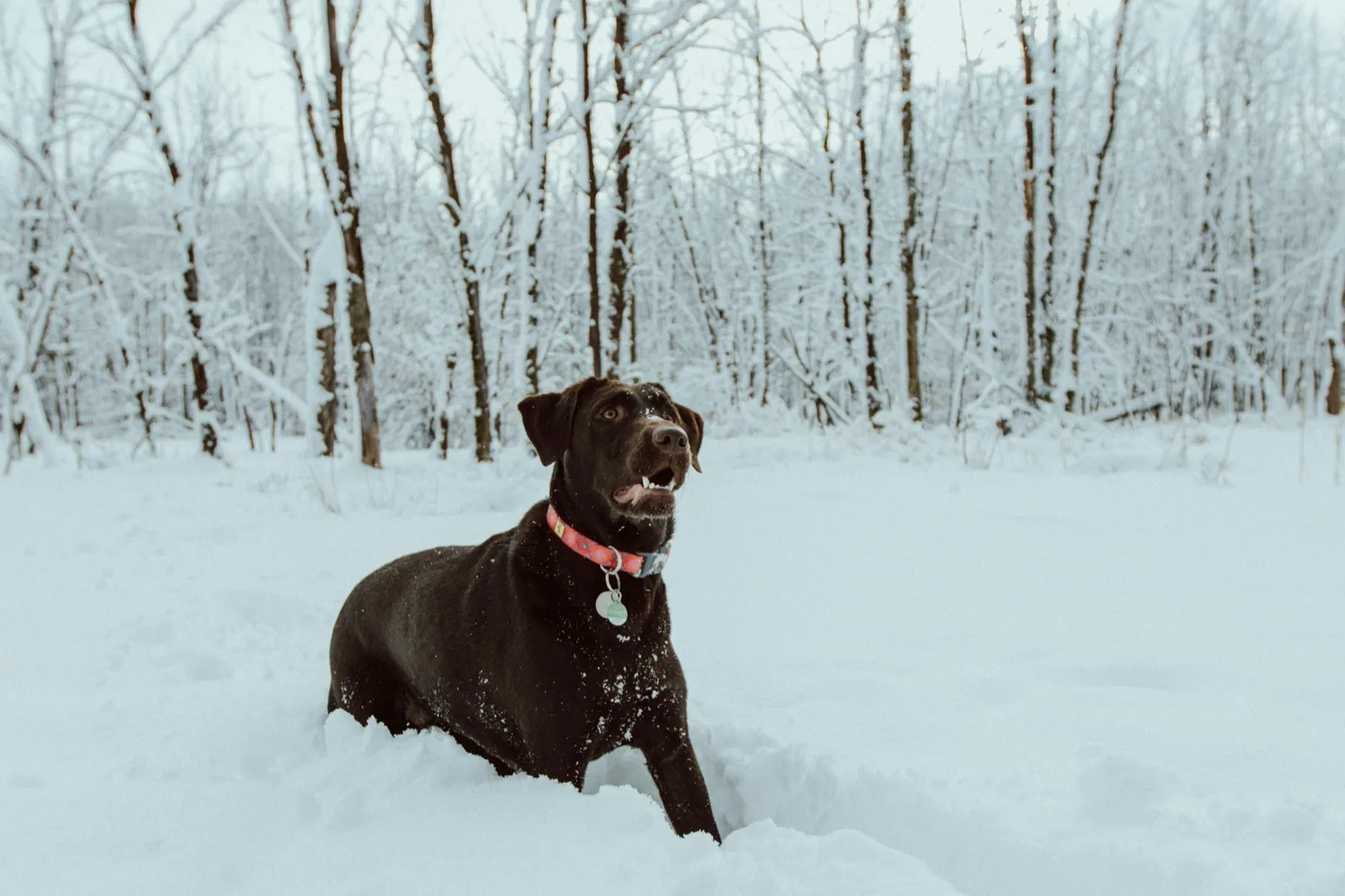
The honest answer is that there isn't one temperature that fits for all dogs. There's a range, and where your dog falls in it depends on her size, coat, age, and general health. A Siberian Husky and a Yorkie are not having the same walk.
That's not a dodge. It's the actual reason people keep asking how cold is too cold for dogs and not finding a satisfying answer. So let's go through what actually determines it.
How Cold Is Too Cold to Walk a Dog?
Most guidance sorts dogs by size and coat, and that's a reasonable place to start.
Air temperature only. Wind, wet ground, and direct sun all move the answer, and none of them appear on this table.
| Air temperature band | Cold-adaptedThick double coats, any size. Huskies, Malamutes, Samoyeds, Great Pyrenees | Large, standard coatLabs, Goldens, German Shepherds | Medium, standard coatBeagles, Spaniels, most Terriers | Small or thin-coatedChihuahuas, Yorkies, Whippets, Greyhounds |
|---|---|---|---|---|
| 45°F and abovecool and above | Within range | Within range | Within range | Within range |
| 32 to 45°Ffreezing to cool | Within range | Within range | Within range | Caution |
| 20 to 32°Fbelow freezing | Within range | Caution | Caution | High risk |
| Below 20°Fhard cold | Caution | Caution | High risk | High risk |
Puppies, seniors, and dogs with health conditions. Read one column to the right of where your dog would sit as a healthy adult. Very young and very old dogs regulate body temperature less effectively, so a senior Husky reads the medium column and an elderly Beagle reads the small or thin-coated column. For a small or thin-coated dog who is also very young, very old, or unwell, shorten the outing and dress her for it.
A dog walking temperature chart like this is useful and it's also the reason so much cold weather advice feels slightly off when you apply it to your own dog. It is sorted by two variables. Your dog is more than two variables, and the weather is more than one.
Why the number on your phone isn't the walk your dog takes
Your weather app reports air temperature. That measurement is averaged for sun vs. shade, at a standard human height, away from buildings. It's a consistent, dependable number, but it isn't measuring conditions your dog is in.
Here's what changes between that reading and the sidewalk:
Wind. Moving air pulls heat off a body much faster than still air does. Your dog is lower to the ground, where wind speed is typically lower than at head height, so the wind she feels can be somewhat gentler than the wind you feel, pulling off less heat.
Sun. Direct sun warms surfaces and bodies well beyond what the air temperature suggests. A sunny 35°F walk and an overcast 35°F walk are different walks.
Wet. A wet coat loses its insulating value. Wet fur conducts heat away from the body instead of trapping it. This is why a dog who was fine on the way out can be struggling on the way back after rain or slush.
Surface. Frozen ground, packed snow, and ice all pull heat directly out of the paws by contact. Air temperature says nothing about what your dog is standing on.
This is the whole idea behind Dog Feel°: taking the conditions your dog is actually in rather than the one number your phone reports, and translating them into what they mean for her specifically.
Is 20 degrees too cold to walk a dog?
This is the version of the question people ask once they've stopped looking for a general answer and started looking at their actual thermometer. Here's each band.
Around 45°F. Within range for nearly every dog. A normal walk at normal length. Thin-coated and very small dogs may appreciate a sweater on longer outings, and that is about the extent of the accommodation needed.
Around 32°F, freezing. Large and medium dogs with standard or double coats generally remain within range. Small, thin-coated, very young, and senior dogs move into caution territory: shorten the walk, consider a coat or booties, and start watching for the signals below. Freezing also changes the ground itself, since ice and slush begin appearing underfoot.
Around 20°F. This is where the answer genuinely splits by dog. Cold-adapted breeds are typically still within range for a normal walk. Large and medium dogs with standard coats warrant caution: shorter loops and attention to wind. Small and thin-coated dogs are at high risk on extended outings at this temperature: keep trips brief and purposeful, with paw and body protection.
Around 10°F and below. Caution applies to every dog now, including the cold-hardy ones. Keep outings short for everyone, protect paws, and treat wind or wet conditions as a reason to shorten further or head home.
Below zero. High risk territory for most dogs. Essential trips only, kept brief, with protection for paws and body. Frostbite on ears, tail, and paws and hypothermia become genuine considerations at these temperatures, and wind makes both arrive faster.
In every one of these, wind, wet, and sun impact the answer. A still, sunny 20°F afternoon and a windy, wet 20°F evening are not the same conditions, and treating them as the same is how people get caught out.
Why two dogs on the same sidewalk aren't having the same walk
You've probably heard that if you're cold, your dog is cold. It's a decent instinct but it's incomplete.
Size. A small dog has more surface area relative to her body mass, so she loses heat faster simply by existing. This is straightforward physics and it's one of the biggest reasons small dogs need shorter winter walks.
Coat. A double coat isn't one coat. It's a dense undercoat trapping air beneath a longer outer layer, and that trapped air is what insulates. A short-coated dog doesn't have that layer at all. This is also why shaving a double-coated dog in any season removes something that's actively working for her.
Age. Very young and very old dogs have more trouble regulating their body temperature as compared to dogs in the middle of life.
Health and body condition. An existing health condition, dogs on either end of the body condition scale, a dog recovering from surgery or an illness: all of these change what she can comfortably handle.
What she's used to. A dog who lives in Minnesota and a dog who moved there in October are not equally prepared for the same February. Healthy adult dogs are likely to adjust more quickly than puppies, seniors, or pets with health conditions. It can take up to 3 months for dogs to fully get used to a new environment.
How to tell your dog is too cold
The temperature tells you what to expect. Your dog tells you what's actually happening. Watch her, not just the forecast.
Lifting a paw off the ground. One of the earliest and most reliable signals, and one of the easiest to miss because it looks like she's just pausing.
Slowing down or falling behind. Especially in a dog who normally pulls ahead. A change from her own baseline matters more than any absolute behavior.
Turning back toward home. Dogs are fairly direct about this. If she keeps orienting toward the way home that's information.
Shivering, with a caveat. Shivering is muscle contracting to generate heat, so it's a real signal. But trembling looks nearly identical and can mean nerves, excitement, pain, or a dog who has simply decided she's finished with this walk. Also a dog who isn't shivering isn't automatically comfortable, because where shivering begins differs from dog to dog. It's far more obvious when toy and very small breed dogs are shivering as it looks like their entire body is vibrating. It can be much harder to notice in large, fluffy dogs.
Tucking up, hunching, or holding the tail tight. A dog making herself smaller is conserving heat or displaying discomfort, both need your attention.
Reluctance to go out at all. Some dogs are more enthusiastic about walks than others. If your dog usually loves walks but seems disinterested or resistant this is worth looking into. The weather can be one of the causes but so can joint pain, back pain, and other health issues. If it happens more frequently, it may be time to talk to your vet.
How long can a dog be outside in the cold?
Duration matters as much as temperature, and it gets less attention because it's harder to put in a chart.
The general idea is as temperature drops, consider shortening rather than skipping the walk. Three short trips out will typically serve a dog better than one long one in cold conditions, and it keeps her routine intact.
Two things that shorten the walk window faster than people expect: wind and wet. A dog who was comfortable for twenty minutes in still conditions may not be at ten minutes in a strong wind. A soaked coat changes the math immediately and dogs lose lots more heat with a wet coat rather than a dry one.
What to do instead of skipping the walk
Cold weather doesn't have to mean a dog who doesn't get out. A few adjustments cover most of it.
Go at midday. Air temperature peaks in the early afternoon and that's also when any available sun is doing the most work. It's often the better window in winter.
Shorten the loop, keep the frequency. Same total time outdoors, split up.
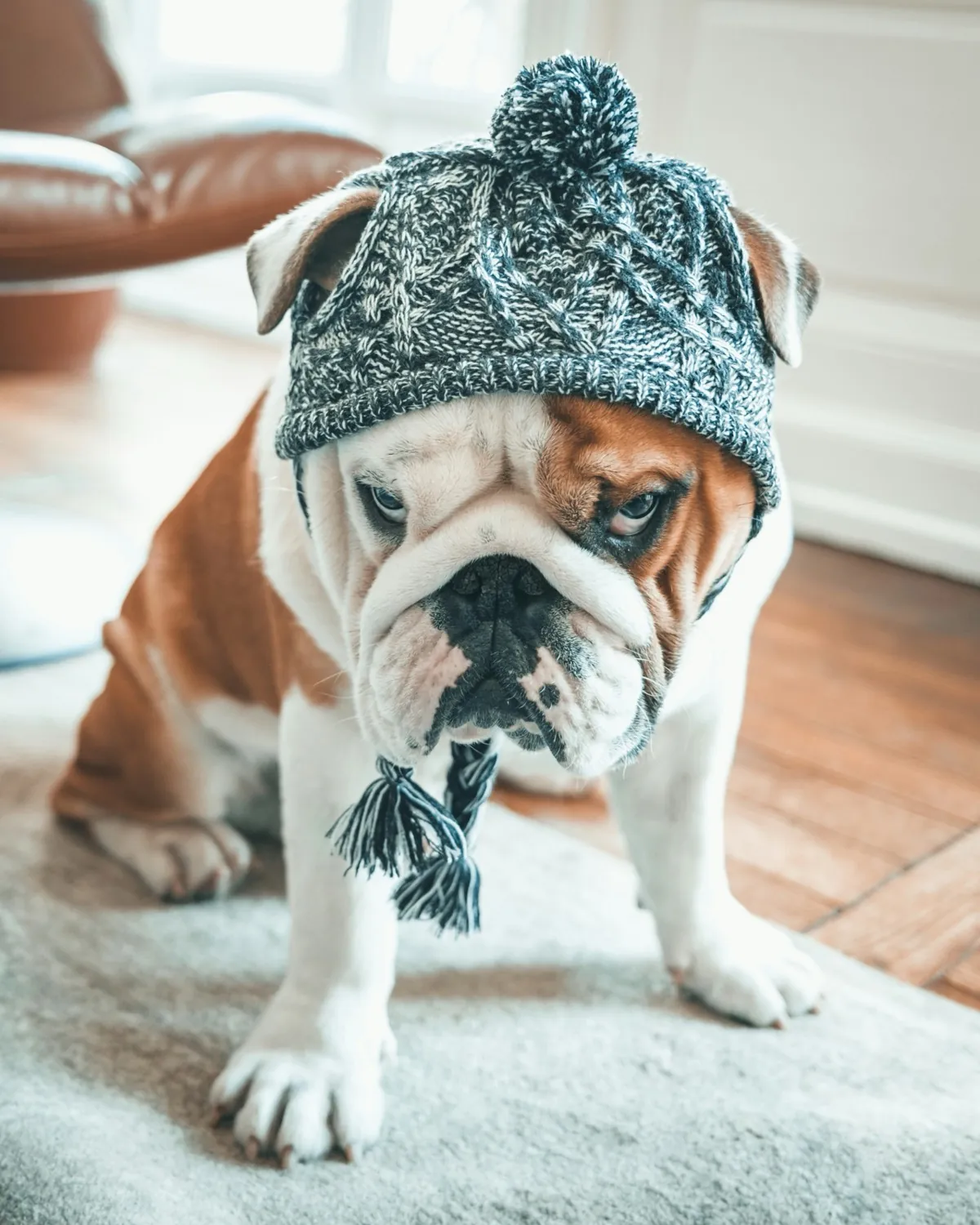
Dress the dogs who need it. Short-coated dogs, small dogs, and dogs who are very young, very old, or unwell benefit meaningfully from a coat or sweater on walks and yard trips. A double-coated dog generally doesn't need one. A working rule by group: small and thin-coated dogs benefit from a sweater or coat below about 45°F. Medium dogs with standard coats benefit below about 32°F, especially on longer or windy walks. Double-coated dogs generally do not need one at any temperature they should be walking in, and layering one on can cause overheating.
Protect the paws. Everyone benefits from paw protection. Boots or paw wax, plus a towel by the door.
Skip the winter haircut. A longer coat may mean more brushing but it's also insulation for your dog.
Add indoor work on the worst days. Consider scent games, training, or a food puzzle. Fifteen minutes of thinking tires a dog out more than most owners expect, and it fills the gap on days when a real walk isn't happening.
Frequently asked questions
Is it too cold to walk my dog today? It depends on more than the temperature: wind, sun, wet ground, and your dog's size and coat all move the answer. Unless the weather is extreme, you should be able to find a short window that might work with the proper precautions. Pawcast™ translates current conditions into what they mean for your specific dog.
What temperature is too cold to walk a small dog? Small and thin-coated dogs, such as Chihuahuas, Yorkies, Whippets, and Greyhounds, move into CAUTION between 32 and 45°F and into HIGH RISK below 32°F. Keep cold-weather trips brief and purposeful, with paw and body protection, and watch for the signals covered above.
Is 20 degrees too cold to walk a dog? At around 20°F the answer genuinely splits by dog. Cold-adapted breeds are typically still within range for a normal walk. Large and medium dogs with standard coats warrant caution, with shorter loops and attention to wind. Small and thin-coated dogs are at high risk on extended outings at this temperature.
Is 30 degrees too cold to walk a dog? At 30°F, cold-adapted breeds are typically still within range for a normal walk. Large and medium dogs with standard coats warrant caution, with shorter loops and attention to wind. Small and thin-coated dogs are at high risk on extended outings at this temperature, so keep trips brief and purposeful, with paw and body protection.
Is 40 degrees too cold to walk a dog? For most dogs, 40°F is a normal walk. Large and medium dogs with standard or double coats generally remain within range. Small, thin-coated, very young, and senior dogs move into caution territory at this temperature: shorten the walk, consider a coat or sweater, and watch for the signals covered above.
Can Huskies and other cold-adapted breeds walk below freezing? Generally yes. Thick double-coated breeds such as Huskies, Malamutes, Samoyeds, and Great Pyrenees typically remain within range from 20 to 32°F. Below 20°F, caution applies even to cold-hardy dogs: keep outings shorter, protect paws, and treat wind or wet conditions as a reason to head home.
Do dogs need coats in winter? Small and thin-coated dogs benefit from a sweater or coat below about 45°F. Medium dogs with standard coats benefit below about 32°F, especially on longer or windy walks. Double-coated dogs generally do not need one at any temperature they should be walking in, and layering one on can cause overheating.
What about puppies, senior dogs, and dogs with health conditions? Read one column to the right of where your dog would sit as a healthy adult, since very young and very old dogs regulate body temperature less effectively. A senior Husky reads the medium column and an elderly Beagle reads the small or thin-coated column. For a small or thin-coated dog who is also very young, very old, or unwell, shorten the outing and dress her for it.
Get your dog's Pawcast
Winter walks have more variables than a forecast shows. Create a free account, add your dog, and see her Dog Feel° and tier for right now and for the hours ahead.
Create your free accountHow Pawcast talks about conditions
A note on the words you will see in this post and in the app. Pawcast™ (weather.pet) describes conditions using three tiers: WITHIN RANGE, CAUTION, and HIGH RISK, alongside a Dog Feel° temperature and a Risk Score from 0 to 100. Conditions are also described relative to your dog's personal band: BELOW RANGE, WITHIN RANGE, or ABOVE RANGE. You will not see absolute promises in Pawcast, in either direction: no wording that guarantees a walk will go well, and no wording that a given moment is risk-free. Conditions are always relative to your specific dog, and your judgment on the ground always comes first.
Reviewed by Hilary Jones, DVM, Chief Veterinary Officer at Pawcast.
Pawcast provides estimates to help guide your decisions, not replace them. Your dog's individual health and real-time condition always come first. This article is informational, is provided for educational purposes, and is not a substitute for veterinary care. If you have concerns about your dog, contact your veterinarian.