Are dog parks right for your dog? Etiquette, turf heat, and who should skip them
Dog parks work for some dogs and go badly for others. Who benefits, who should skip it, how to read the park before you unclip, basic etiquette, and the hazard most pet parents never check.
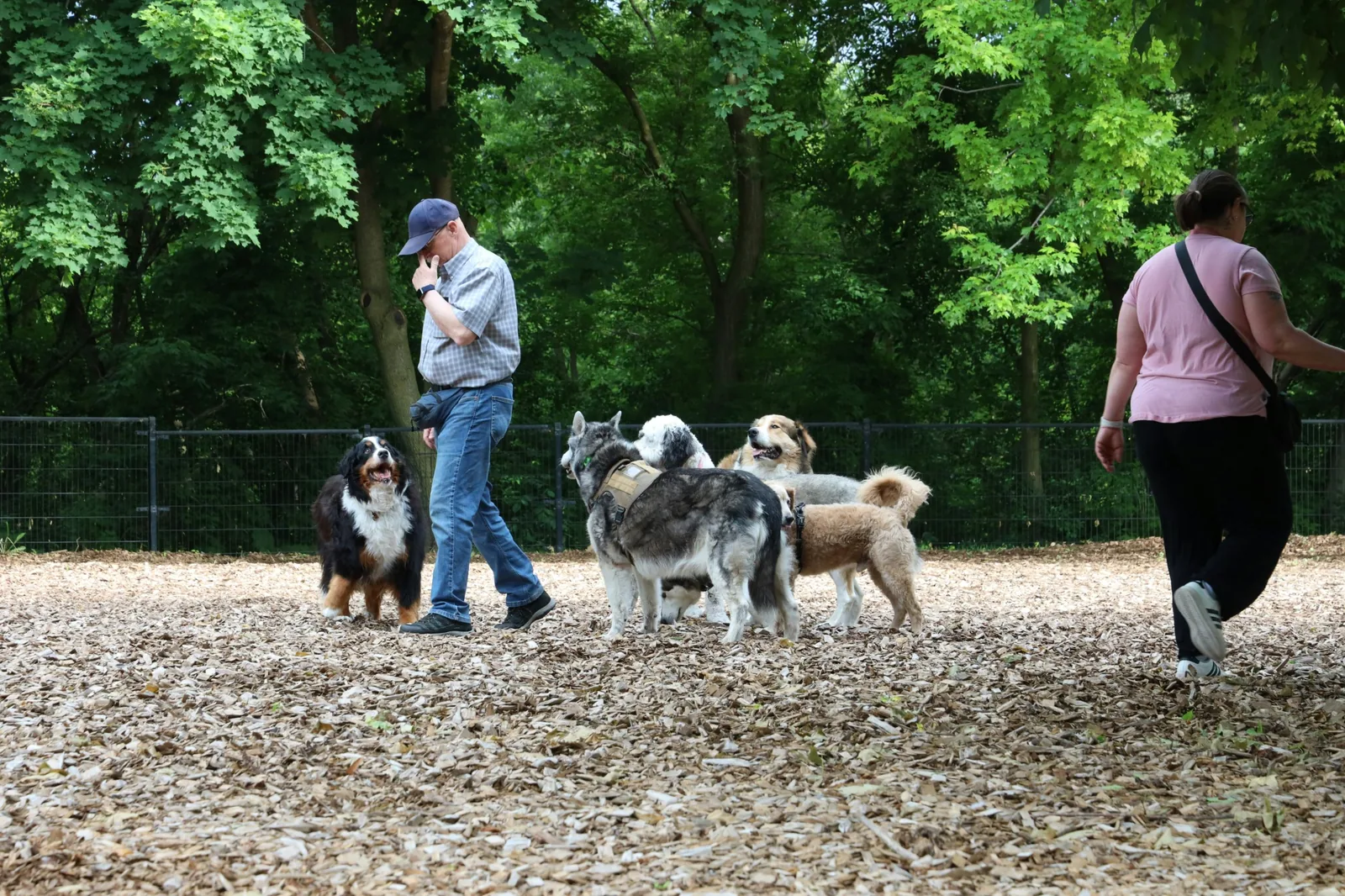
Dog parks are the most popular off-leash option in American cities and the single most common source of the behavior problems trainers see: reactivity on leash, fear of other dogs, and injuries from a play session that tipped over. The same park produces both outcomes. The difference is the dog, the day, and the surface.
This guide covers who benefits from a dog park, who should skip it, how to read the park before you unclip the leash, basic dog park etiquette, and a hazard most pet parents never check: artificial turf in the sun.
Who benefits from a dog park
A dog park works for a dog who already has solid social skills, reads other dogs well, and can be called away from play. Typically that is a confident adult dog with a history of friendly play, who takes breaks on her own, and who responds to her name even when excited.
For that dog, a quiet park at an off-peak hour is exercise and enrichment a leash walk cannot match.
Who should skip it
- Puppies under about 16 weeks who have not finished their core vaccine series. Parvovirus lives in soil, and a busy dog park is the worst place to test it. Our puppy vaccine schedule covers the timing.
- Adolescent dogs (6 to 18 months) who play rough and do not yet take breaks. They learn bad habits fast in a crowd.
- Dogs who are nervous, shy, or have ever snapped at another dog. A dog park is not where a worried dog learns to relax. It is where a worried dog learns that other dogs are a threat.
- Dogs recovering from illness or surgery, dogs in heat, and senior dogs with mobility issues who cannot get out of the way of a body-slam.
- Any dog whose recall falls apart around other dogs. If you cannot get your dog out of a situation, you cannot keep her out of trouble.
Skipping the park is not a failure. Most dogs do better with one or two known dog friends on a walk or in a yard than with twenty strangers at once.
How to read the park before you go in
Stand at the fence for two minutes. Look for: how many dogs, whether play is in pairs or a mob, whether anyone is being chased who does not want to be, whether pet parents are watching their dogs or their phones, and whether there is a dog who is clearly the problem. If any of those look wrong, walk the perimeter instead and come back another time. Early morning on a weekday is usually calmest.
Dog park etiquette and rules
- Keep moving. Standing in one spot creates a crowd around you and your dog. Walking the park keeps play loose.
- Watch your own dog. Not the group. Yours.
- Interrupt before it escalates. Mounting, pinning, relentless chasing of one dog, and stiff posture with a high tail are the moments to call your dog away, not after the growl.
- Leave toys and food at home. Both start fights.
- Leash on and off at the gate, not inside the park. Leashed dogs in a group of loose dogs feel trapped.
- Leave when your dog is done. Tired dogs make bad choices. Twenty minutes is plenty for most dogs.
- Pick up after your dog. Every time.
- Follow the posted rules on size divisions and hours. Small-dog areas exist for a reason.
Artificial turf at the dog park: the hazard nobody checks
Hilary Jones, DVM, Chief Veterinary Officer
Many newer dog parks, and nearly all rooftop and indoor-outdoor parks in cities, are surfaced with artificial turf. It drains well and does not turn to mud. It also absorbs and holds heat in a way grass never does.
In full sun, synthetic turf runs hotter than asphalt. That is not a guess. We measured it.
On an 89°F afternoon this past spring, our field team measured dog park turf at over 140°F. The asphalt a few steps away read 126°F.
Infrared surface readings taken at the same park within the same minute. Turf, asphalt, and concrete were measured side by side.A park that is comfortable at 9 a.m. can burn pads by early afternoon on a day that does not feel hot to a person in shoes. Dogs playing hard on turf also have no cool spot to lie down, which pushes their body temperature up faster than the same play on grass. Our asphalt readings show how far surfaces drift from the air temperature; turf drifts further.
Three checks before you let your dog loose on turf:
- The five-second test. Press the back of your hand to the turf for five seconds. If you cannot hold it there, your dog should not be on it. Here is the 5-second pavement test.
- Shade and water. Is there any shaded turf, and is there water in the park? If not, keep the visit short and early.
- Your dog's surface in Pawcast. Pawcast estimates surface temperature for your location, and if your dog's usual park is turf, you can set that surface so the reading reflects it. Turf-specific readings are a newer addition and the dataset is still growing; grass, concrete, and asphalt are the longest-tracked surfaces.
Turf is a summer problem first, but a cold, hard, frozen turf surface in January is also harder on joints than grass. Senior dogs notice. For the heat side of the calendar, see how hot is too hot to walk a dog.
Alternatives that give you most of the upside
A sniff walk on a long line in a quiet field. A play date with one dog your dog already likes. A private yard rental by the hour (several apps offer them). Structured group training classes, where play is supervised and interrupted on purpose. For most dogs, these do more for behavior and fitness than the park, with less risk.
Frequently asked questions
Are dog parks good for dogs? For a confident, well-socialized adult dog with reliable recall, at a quiet hour, yes. For puppies, anxious dogs, and dogs who cannot be called away from play, the same park causes problems. The answer is about the dog, not the park.
When can puppies go to the dog park? After the core vaccine series is complete, usually around 16 to 18 weeks, and after the puppy has had positive one-on-one experiences with known dogs. A busy park should not be a puppy's first group experience.
How hot does artificial turf get? Hot enough to burn pads on a sunny day in the 80s. Our field readings on dog park turf passed 140°F with the air at 89°F. Check it with your hand before every visit, and use the surface setting in Pawcast if your park is turf.
What should I do if there's a dog fight at the dog park? Do not grab collars. Make a loud noise, use water if there is a bowl, or lift the back legs of the dog that is attacking (the wheelbarrow) and pull back. Leash your dog and leave. Check for puncture wounds, which are easy to miss under fur, and call your vet pro if you find any.
Know the surface before you unclip
Pawcast™ reads today's conditions against your dog's breed, coat, and age, with surface temperature estimates for the ground she will actually stand on. Create a free account, add your dog, and set her usual park surface.
Create your free accountHow Pawcast talks about conditions
A note on the words you will see in this post and in the app. Pawcast™ (weather.pet) describes conditions using three tiers: WITHIN RANGE, CAUTION, and HIGH RISK, alongside a Dog Feel° temperature and a Risk Score from 0 to 100. Conditions are also described relative to your dog's personal band: BELOW RANGE, WITHIN RANGE, or ABOVE RANGE. You will not see absolute promises in Pawcast, in either direction: no wording that guarantees a walk will go well, and no wording that a given moment is risk-free. Conditions are always relative to your specific dog, and your judgment on the ground always comes first.
Written by Kristen VanNess, KPA CTP, Head Trainer at Weather.pet. Turf heat section by Hilary Jones, DVM, Chief Veterinary Officer at Pawcast, who reviewed the full post. Surface temperature figures are from Pawcast field readings.
Pawcast provides estimates to help guide your decisions, not replace them. Your dog's individual health and real-time condition always come first. This article is informational, is provided for educational purposes, and is not a substitute for veterinary care. If you have concerns about your dog, contact your veterinarian.